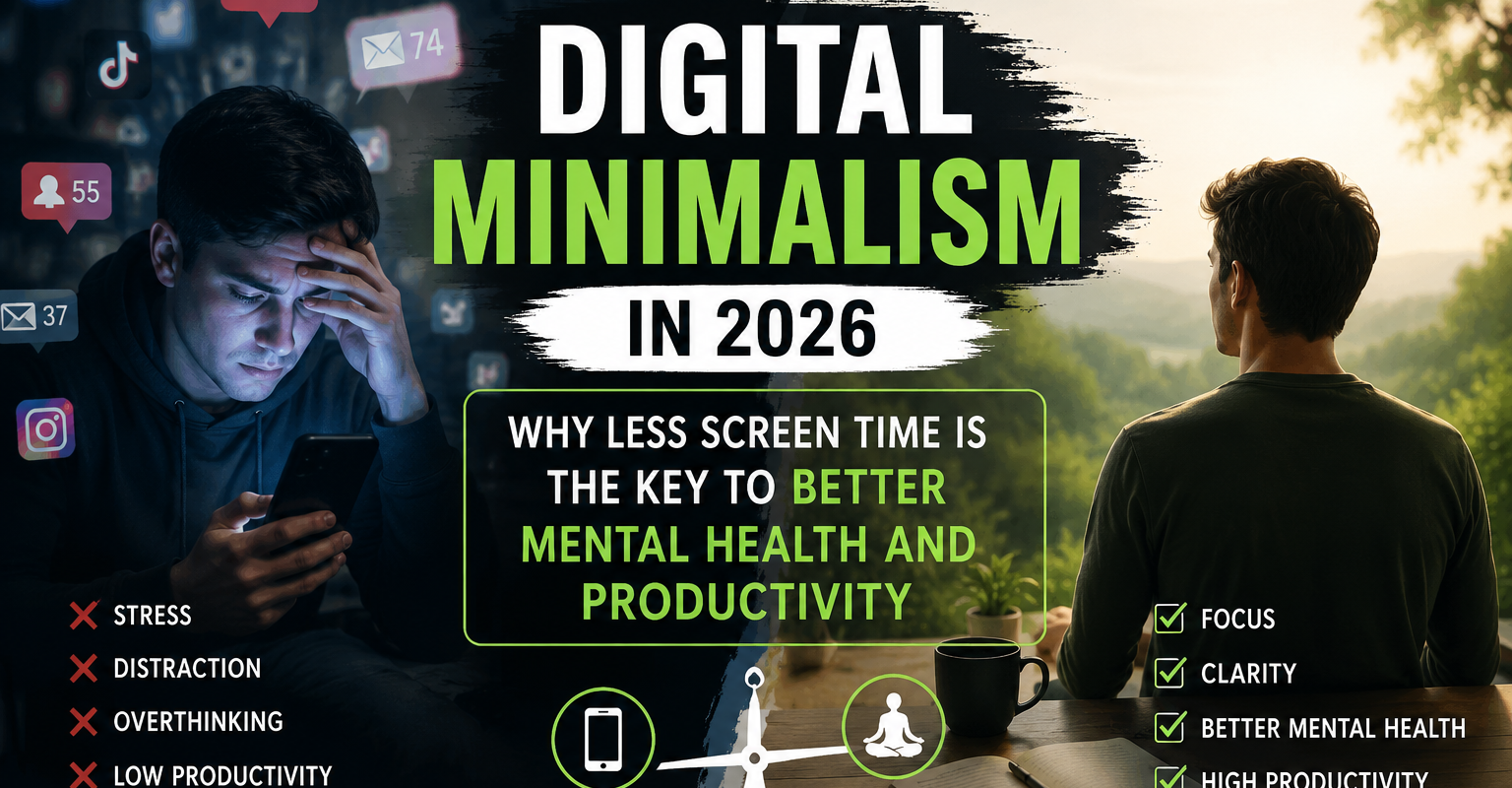
In 2026, people are more connected than ever before — yet more distracted, mentally exhausted, and emotionally overwhelmed than at any other time in history.
From endless scrolling and short-form videos to constant notifications and AI-powered content feeds, modern technology is competing for your attention every second of the day. As a result, millions of people are now searching for ways to reduce screen addiction, improve focus, and regain mental clarity.
This is why digital minimalism has become one of the fastest-growing trends in:
- personal development
- self improvement
- mental health
- productivity
- self discipline
- life transformation
People are beginning to realize that sometimes the best way to improve your life is not by adding more — but by removing distractions.
What Is Digital Minimalism?
Digital minimalism is the practice of using technology intentionally instead of compulsively.
It does not mean quitting the internet completely or deleting every social media account.
Instead, digital minimalism focuses on:
- reducing unnecessary screen time
- limiting distractions
- improving focus
- protecting mental health
- using technology with purpose
The goal is simple: control technology before it controls you.
In today’s overstimulated world, this mindset is becoming essential for maintaining emotional balance and productivity.
Why People Are Burned Out in 2026
Modern apps and platforms are designed to keep users engaged for as long as possible.
Every day, people consume:
- endless short videos
- social media posts
- AI-generated content
- notifications
- online drama
- entertainment feeds
Your brain never gets enough rest.
This constant stimulation overloads the mind and creates:
- mental fatigue
- anxiety
- poor concentration
- emotional exhaustion
- lack of motivation
Many people now feel tired even after doing “nothing” all day because their brains are constantly processing information.
This is one of the biggest hidden causes of digital burnout in 2026.
How Social Media Is Affecting Mental Health
Social media affects more than just attention span.
It also affects:
- self confidence
- emotional stability
- happiness
- self worth
- productivity
When people constantly compare themselves to:
- influencers
- luxury lifestyles
- success stories
- perfect bodies
- filtered realities
they often begin feeling insecure or emotionally drained.
This comparison culture has created rising levels of:
- stress
- anxiety
- loneliness
- low self esteem
Even successful people experience mental exhaustion from excessive social media use.
The Attention Span Crisis
One of the biggest problems in modern life is declining attention span.
Short-form content platforms train the brain to expect constant stimulation and instant rewards.
As a result, many people now struggle to:
- focus deeply
- read books
- study effectively
- complete difficult tasks
- stay productive
This is why focus and concentration have become valuable skills in 2026.
People who can protect their attention now have a major advantage in work, learning, creativity, and personal growth.
Why Digital Minimalism Is Becoming Popular
People are beginning to prioritize:
- peace of mind
- mental clarity
- emotional balance
- productivity
- meaningful relationships
over endless entertainment and digital noise.
Digital minimalism helps people:
- think more clearly
- feel calmer
- improve sleep
- reduce anxiety
- regain control of their time
This is why digital detox and screen time reduction are becoming major topics in self development communities worldwide.
Signs You Need a Digital Detox
You may need a break from digital overload if you:
- check your phone constantly
- feel anxious without notifications
- struggle to focus for long periods
- compare yourself online often
- lose hours scrolling unintentionally
- feel mentally exhausted after social media use
- cannot sit quietly without stimulation
These signs are becoming increasingly common in the digital age.
Benefits of Reducing Screen Time
1. Better Focus and Productivity
When distractions decrease, concentration improves naturally.
You become more productive and mentally organized.
2. Improved Mental Health
Reducing comparison and overstimulation often lowers stress and anxiety.
3. Better Sleep Quality
Less screen exposure before bed improves sleep and brain recovery.
4. More Free Time
Most people underestimate how many hours social media consumes daily.
5. Stronger Real-Life Relationships
Spending less time online creates more opportunities for meaningful offline connections.
How to Practice Digital Minimalism
Remove Unnecessary Apps
Delete apps that waste your attention without adding real value.
Turn Off Notifications
Notifications constantly interrupt focus and increase mental stress.
Create Screen-Free Hours
Avoid screens:
- after waking up
- before sleep
- during meals
- during deep work sessions
Replace Scrolling With Better Habits
Use your free time for:
- reading
- exercise
- journaling
- learning skills
- meditation
- outdoor activities
Healthy habits improve both mental clarity and self mastery.
Limit Short-Form Content
Short videos train the brain for instant gratification and weaken long-term focus.
Reducing them can improve concentration significantly.
The Connection Between Digital Minimalism and Personal Growth
Digital minimalism is not just about technology.
It is about reclaiming your:
- attention
- focus
- energy
- time
- mental peace
When your mind becomes less distracted, personal growth becomes easier.
This is why digital minimalism strongly supports:
- self improvement
- personal development
- self discipline
- success mindset
- life purpose
Your environment shapes your thinking, habits, and future.
Why Real Life Feels Better Offline
The internet provides stimulation.
Real life provides fulfillment.
Offline experiences often create deeper happiness:
- conversations
- exercise
- nature
- creativity
- hobbies
- meaningful work
Many people are now rediscovering the importance of living more intentionally instead of constantly consuming digital content.
The Future of Attention in 2026
As technology becomes more addictive, attention is becoming one of the most valuable resources in the world.
People who can:
- stay focused
- avoid distractions
- think deeply
- protect mental clarity
will have a major advantage in both life and career.
Digital minimalism is no longer just a trend.
It is becoming a survival skill for mental health, productivity, and emotional balance in the modern world.
Final Thoughts
Technology is powerful, but too much digital stimulation can damage focus, happiness, and mental wellbeing.
Digital minimalism helps people slow down, think clearly, and reconnect with what truly matters.
In 2026, protecting your attention may become one of the most important forms of self improvement and personal growth.
The goal is not to reject technology completely.
The goal is to use technology intentionally instead of letting it control your mind, habits, and emotions.
Sometimes a calmer life begins with a quieter screen.