
Introduction
The debate around self improvement vs self acceptance has become more popular than ever in today’s world. Some people believe constant growth and discipline are the keys to success, while others believe true happiness comes from accepting yourself exactly as you are.
But when discussing self improvement vs self acceptance, the truth is not about choosing one side over the other. Real growth happens when both work together in balance.
Many people push themselves so hard toward success that they lose peace of mind. Others become so focused on acceptance that they stop growing completely. Understanding the balance between self improvement vs self acceptance is essential for long-term happiness, confidence, and emotional health.
This article explores the real difference between self improvement vs self acceptance, how they affect your mindset, and how combining both can create powerful personal growth and lasting life transformation.
What Is Self Improvement?
Before understanding self improvement vs self acceptance, it is important to define both concepts clearly.
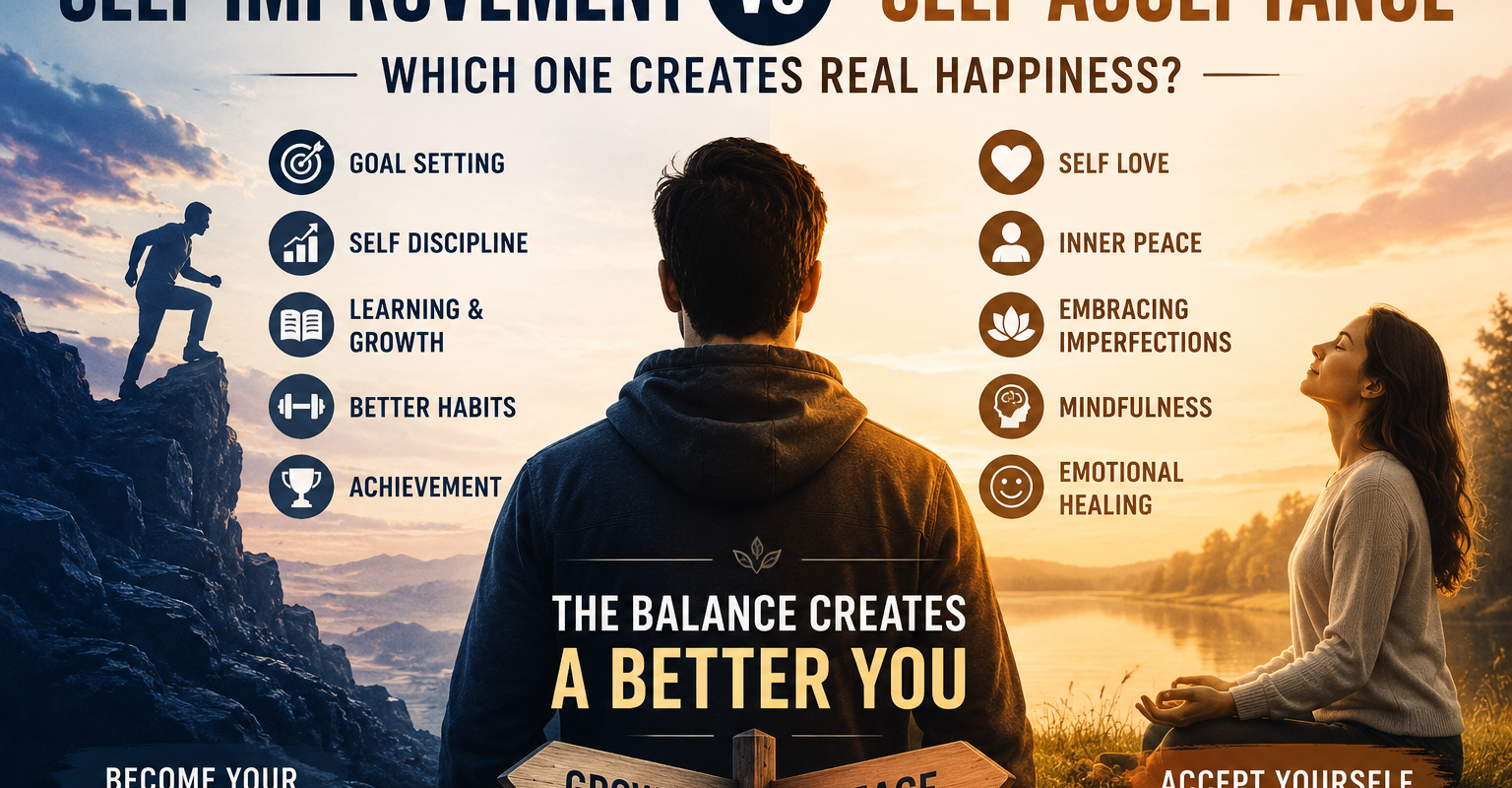
Self improvement is the process of becoming a better version of yourself through:
- Better habits
- Learning new skills
- Improving mindset
- Increasing discipline
- Building emotional intelligence
People focused on self improvement usually want:
- Better careers
- Stronger confidence
- Healthier lifestyles
- More productivity
- Greater success
Self improvement is deeply connected to personal development because it encourages continuous learning and growth.
Without growth, life often feels stagnant.
What Is Self Acceptance?
The second side of self improvement vs self acceptance is self acceptance.
Self acceptance means recognizing your worth without constantly criticizing yourself. It means accepting imperfections while still understanding your potential for growth.
Healthy self acceptance includes:
- Being kind to yourself
- Letting go of perfectionism
- Accepting mistakes
- Reducing self-judgment
- Understanding that nobody is perfect
Many people misunderstand self acceptance and assume it means avoiding responsibility or ambition. In reality, self acceptance simply means you stop hating yourself during the growth process.
Self Improvement vs Self Acceptance: The Core Difference
The biggest difference between self improvement vs self acceptance is their primary focus.
| Self Improvement | Self Acceptance |
|---|---|
| Focuses on growth | Focuses on inner peace |
| Encourages discipline | Encourages compassion |
| Builds future success | Supports emotional healing |
| Motivates action | Reduces self-criticism |
| Develops skills | Develops self-awareness |
Understanding self improvement vs self acceptance helps people avoid emotional extremes.
Too much self improvement can create burnout.
Too much self acceptance can create stagnation.
Balance creates emotional strength.
Why Self Improvement Alone Can Become Toxic
One of the biggest problems in the self improvement vs self acceptance discussion is unhealthy obsession with productivity and perfection.
Many people constantly feel:
- Not successful enough
- Not attractive enough
- Not productive enough
- Not disciplined enough
They believe happiness only comes after achieving certain goals.
As a result:
- Anxiety increases
- Burnout becomes common
- Self confidence decreases
- Mental health suffers
Without self acceptance, self improvement can become endless self-criticism instead of healthy growth.
Why Self Acceptance Alone Can Limit Growth
The other side of self improvement vs self acceptance also has challenges.
Some people use self acceptance as an excuse to avoid:
- Responsibility
- Discipline
- Difficult changes
- Personal accountability
True growth requires effort.
Without self discipline, dreams remain unfinished and opportunities are lost.
Healthy self acceptance says:
“I value myself while still working toward improvement.”
That balance is essential.
How Self Confidence Depends on Both
When discussing self improvement vs self acceptance, confidence is one of the most important factors.
Real self confidence comes from combining:
- Self respect
- Growth
- Emotional balance
- Action
If you only improve yourself but never feel satisfied, confidence remains fragile.
If you only accept yourself without challenging yourself, confidence lacks strength and direction.
Lasting confidence comes from knowing:
- You are worthy now
- You are still capable of growth
That mindset creates emotional stability.
The Role of Self Discipline
Another important factor in self improvement vs self acceptance is discipline.
Discipline allows people to:
- Stay consistent
- Build healthy habits
- Improve mental strength
- Achieve long-term goals
But discipline becomes unhealthy when combined with constant self-hate.
The healthiest form of discipline comes from respect, not punishment.
People who combine self mastery with self acceptance often achieve more sustainable success because they avoid emotional burnout.
Success Mindset and Emotional Balance
A healthy success mindset requires understanding both sides of self improvement vs self acceptance.
Successful people understand:
- Growth takes time
- Failure is normal
- Perfection is impossible
- Self-worth should not depend entirely on achievement
Instead of constantly judging themselves, they focus on progress and learning.
This mindset creates both ambition and peace.
Finding Life Purpose Through Growth and Acceptance
The conversation around self improvement vs self acceptance also affects how people discover their life purpose.
People who constantly criticize themselves often feel lost and emotionally exhausted.
People who completely avoid growth often feel unfulfilled and directionless.
Purpose becomes clearer when you:
- Accept yourself honestly
- Continue learning
- Improve your strengths
- Stay open to growth opportunities
Growth creates direction.
Acceptance creates peace during the journey.
Practical Ways to Balance Self Improvement and Self Acceptance
1. Improve Yourself From Self Respect
Do not improve yourself because you feel worthless.
Improve because you believe your potential deserves development.
2. Stop Chasing Perfection
Perfection does not exist.
Progress matters more than flawless performance.
3. Celebrate Small Wins
Many people focus only on what they have not achieved yet.
Recognizing progress improves motivation and confidence.
4. Practice Healthy Self Discipline
Stay consistent without becoming emotionally harsh toward yourself.
Discipline should support growth, not destroy mental health.
5. Reduce Comparison
Comparison creates insecurity and emotional pressure.
Your growth journey is unique.
Why Self Mastery Is the Real Goal
The deeper lesson behind self improvement vs self acceptance is that both are necessary for self mastery.
Self mastery means:
- Understanding your emotions
- Managing your thoughts
- Staying disciplined
- Accepting imperfections
- Continuing to grow
People with self mastery avoid emotional extremes.
They understand that:
- Growth matters
- Rest matters
- Discipline matters
- Compassion matters too
That balance creates sustainable success and happiness.
Final Thoughts
The debate around self improvement vs self acceptance is not about choosing one over the other.
Both are essential for healthy personal growth and emotional well-being.
Self improvement helps you grow stronger, smarter, and more disciplined.
Self acceptance helps you maintain peace, confidence, and emotional balance during the process.
When combined together, they create:
- Better confidence
- Stronger mental health
- Sustainable growth
- Clearer purpose
- Lasting transformation
You do not need to become perfect to deserve happiness.
And you should never stop growing simply because growth feels difficult.
The healthiest path is learning how to grow while still valuing yourself.
That balance is where real success begins.
FAQs
What is the main difference between self improvement vs self acceptance?
Self improvement focuses on growth and progress, while self acceptance focuses on emotional peace and reducing self-judgment.
Can self improvement become unhealthy?
Yes. Without self acceptance, self improvement can lead to perfectionism, anxiety, and burnout.
Why is self acceptance important?
Self acceptance improves emotional health, reduces stress, and helps people grow without constant self-criticism.
How do I balance self improvement vs self acceptance?
Focus on growth while practicing self compassion, celebrating progress, and avoiding perfectionism.
Does self confidence require both?
Yes. Lasting self confidence comes from both accepting yourself and continuing to improve yourself over time.