
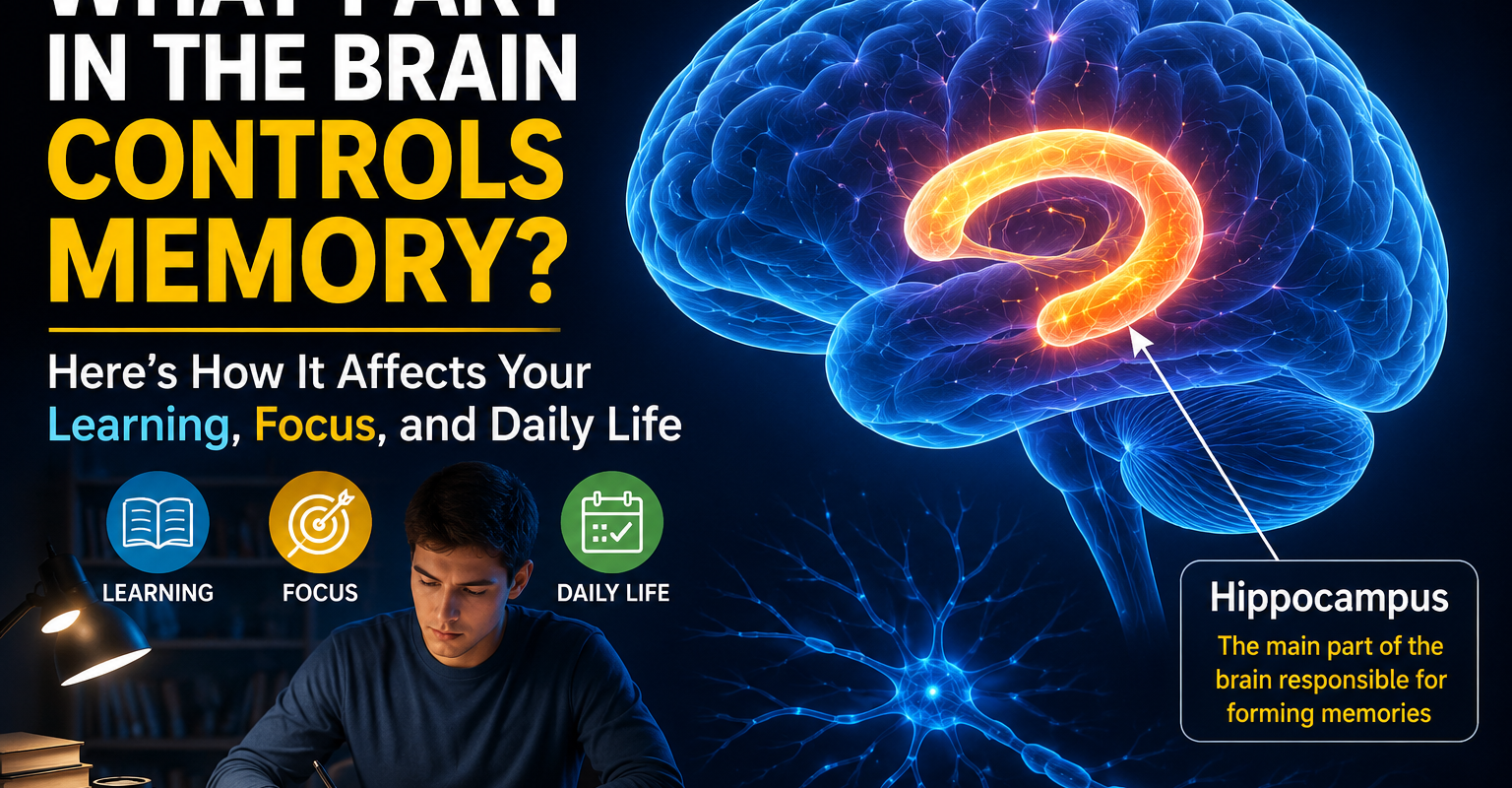
Memory is one of the most powerful functions of the human brain. It helps people learn new skills, remember important experiences, build relationships, and improve daily performance. Many people wonder what part in the brain controls memory and how memory impacts focus, learning, emotions, and overall success in life.
Understanding what part in the brain controls memory is important not only for education and productivity but also for personal development, self improvement, and long-term personal growth. Your memory affects how you think, learn, communicate, and make decisions every day.
People with strong memory and focus often perform better in work, studies, and relationships because the brain plays a huge role in building a strong success mindset and achieving life transformation.
In this article, you will learn:
- what part in the brain controls memory
- how memory works
- why people forget things
- how stress affects memory
- ways to improve memory naturally
- how memory connects with self mastery and personal growth
What Part in the Brain Controls Memory?
The main answer to what part in the brain controls memory is the hippocampus. The hippocampus is a small structure located deep inside the brain’s temporal lobe. It is mainly responsible for creating, organizing, and storing memories.
When discussing what part in the brain controls memory, scientists usually focus on the hippocampus because it helps convert short-term memories into long-term memories. Without it, learning and remembering information becomes extremely difficult.
The hippocampus helps people:
- remember experiences
- learn new skills
- store information
- recognize places
- improve concentration
Understanding what part in the brain controls memory is important because memory directly impacts learning ability, productivity, and overall self development.
Why Memory Is Important in Daily Life
Memory affects nearly every part of life. From remembering names to achieving career goals, memory shapes how people think and behave.
Good memory supports:
- learning
- communication
- emotional intelligence
- decision-making
- confidence
People focused on personal development and self improvement often work on improving memory because mental performance is connected with growth and productivity.
Strong memory also helps build:
- better habits
- stronger focus
- higher motivation
- improved discipline
This is why understanding what part in the brain controls memory matters for anyone interested in self mastery and long-term success.
Other Brain Parts That Help Memory
Although the hippocampus is the primary answer to what part in the brain controls memory, other parts of the brain also support memory and thinking.
Prefrontal Cortex
The prefrontal cortex helps with:
- focus
- planning
- decision-making
- working memory
This area is very important for self discipline and building productive habits.
Amygdala
The amygdala handles emotional memories. Emotional experiences are easier to remember because this part of the brain connects feelings with memories.
Cerebellum
The cerebellum helps store physical skill memories like:
- driving
- cycling
- typing
- sports activities
Understanding what part in the brain controls memory shows that memory is a complex process involving several brain areas working together.
How Memory Works
To fully understand what part in the brain controls memory, it is important to know how memories are formed.
Memory works in three main stages:
1. Encoding
The brain receives information through the senses such as:
- sight
- hearing
- smell
- touch
2. Storage
The hippocampus organizes and stores information.
3. Retrieval
The brain recalls stored information when needed.
Repeating information strengthens neural connections in the brain, which improves memory retention. This is why practice and consistency are important for learning and self development.
Why People Forget Things
Even after learning what part in the brain controls memory, many people still experience forgetfulness.
Several factors can weaken memory:
Stress
Stress increases cortisol levels, which negatively affect the hippocampus.
Poor Sleep
Lack of sleep reduces the brain’s ability to store memories properly.
Digital Distractions
Constant scrolling and multitasking reduce concentration and focus.
Poor Lifestyle Habits
Unhealthy food, lack of exercise, and low mental stimulation can affect brain performance.
Negative Thinking
Negative thoughts can impact focus, confidence, and mental clarity.
People focused on self improvement and personal growth should understand how daily habits affect memory and brain function.
The Connection Between Memory and Self Improvement
There is a strong connection between memory and self improvement. Better memory improves learning, communication, productivity, and confidence.
People working on personal development often focus on:
- reading
- learning new skills
- journaling
- mindfulness
- habit building
All of these activities strengthen brain function and support memory growth.
Understanding what part in the brain controls memory can help people become more intentional about protecting and improving brain health.
Memory also plays a major role in:
- building self confidence
- improving discipline
- achieving goals
- maintaining focus
Without good memory and concentration, achieving life transformation becomes much more difficult.
How Stress Affects Brain Performance
Stress is one of the biggest enemies of memory and focus.
When people experience constant stress, the brain struggles to process and store information properly. Since the hippocampus is central to what part in the brain controls memory, stress can weaken memory performance over time.
Common symptoms of stress-related memory problems include:
- brain fog
- forgetfulness
- poor focus
- low motivation
- mental fatigue
Managing stress is essential for maintaining a healthy brain and building a strong success mindset.
Ways to Improve Memory Naturally
Now that you understand what part in the brain controls memory, here are practical ways to improve memory naturally.
Get Quality Sleep
Sleep helps the brain organize and strengthen memories.
Exercise Regularly
Physical activity improves blood circulation and supports brain health.
Read Daily
Reading stimulates the brain and improves concentration.
Practice Meditation
Meditation reduces stress and improves mental clarity.
Reduce Distractions
Too much social media and multitasking weaken memory and focus.
Eat Healthy Foods
Brain-friendly foods rich in vitamins and omega-3 fatty acids support memory function.
People interested in self mastery and personal growth should make these habits part of daily life.
Memory and Success Mindset
A strong memory helps people stay focused, organized, and motivated. This is why memory is connected with building a powerful success mindset.
People with better memory often:
- learn faster
- communicate clearly
- manage responsibilities effectively
- improve productivity
- build stronger confidence
Understanding what part in the brain controls memory can help people take mental performance seriously and work toward long-term growth.
Developing better memory is not just about academics. It also supports:
- leadership
- discipline
- emotional intelligence
- confidence
- goal achievement
The Role of Self Discipline in Brain Health
Healthy habits improve both memory and mental performance. This is where self discipline becomes important.
Simple habits that improve brain function include:
- sleeping on time
- avoiding distractions
- exercising daily
- reading regularly
- practicing mindfulness
Consistency is the foundation of both self development and brain improvement.
People who practice strong habits often experience:
- better focus
- stronger confidence
- improved productivity
- clearer thinking
These habits support long-term life transformation and mental growth.
Memory, Life Purpose, and Personal Growth
Memory also helps people connect with their experiences, lessons, and goals. It shapes personality and influences decision-making.
People pursuing their life purpose need strong mental clarity and focus to make better decisions and stay committed to growth.
Understanding what part in the brain controls memory can motivate people to:
- protect brain health
- improve learning ability
- develop stronger habits
- build mental resilience
Memory is not only about remembering facts. It also supports emotional growth, confidence, and meaningful progress in life.
Final Thoughts
So, what part in the brain controls memory?
The hippocampus is the main part of the brain responsible for forming and organizing memories. Other areas like the prefrontal cortex, amygdala, and cerebellum also support learning and memory functions.
Understanding what part in the brain controls memory is important for improving focus, productivity, and overall mental performance. Memory affects every area of life, from education and work to relationships and personal success.
By improving habits like:
- sleep
- exercise
- reading
- meditation
- stress management
people can strengthen memory and support long-term personal growth, self confidence, self mastery, and overall life transformation.
A healthy brain is one of the most powerful tools for achieving success and becoming the best version of yourself.